
Basic Care
Regal jumping spiders (Phidippus regius) are hardy, low-maintenance, and easy to keep happy once their enclosure is set up right. Here’s what every new keeper needs to know.
🌡️ Temperature & Humidity
Aim for a daytime temperature of 75–85°F, dropping slightly at night. Humidity should sit somewhere in the 50–70% range — a bit higher during molting. Most Florida homes stay naturally within this range, so a heat mat or humidifier usually isn’t necessary indoors. A small thermometer/hygrometer combo is an inexpensive way to keep an eye on both.
🦗 Feeding
Young spiders eat daily or every other day; as they mature, 2–3 feedings a week is typical. Keep prey smaller than the spider’s abdomen — mini mealworms, flightless fruit flies, and small crickets all work well, sizing up as your spider grows.
Watch the spider’s abdomen size as a guide: a shrunken abdomen means it’s hungry, a very plump one means it’s had enough (or is getting ready to molt). Never feed a spider that’s sealed itself into its hammock — that’s a sign a molt is coming.
💧 Water & Misting
Mist the sides of the enclosure lightly every 1–2 days rather than spraying the spider directly — they drink water droplets off the walls and substrate. A small water dish can help too, though many keepers rely on misting alone. Increase misting frequency slightly in the days leading up to a molt.
🔄 Molting
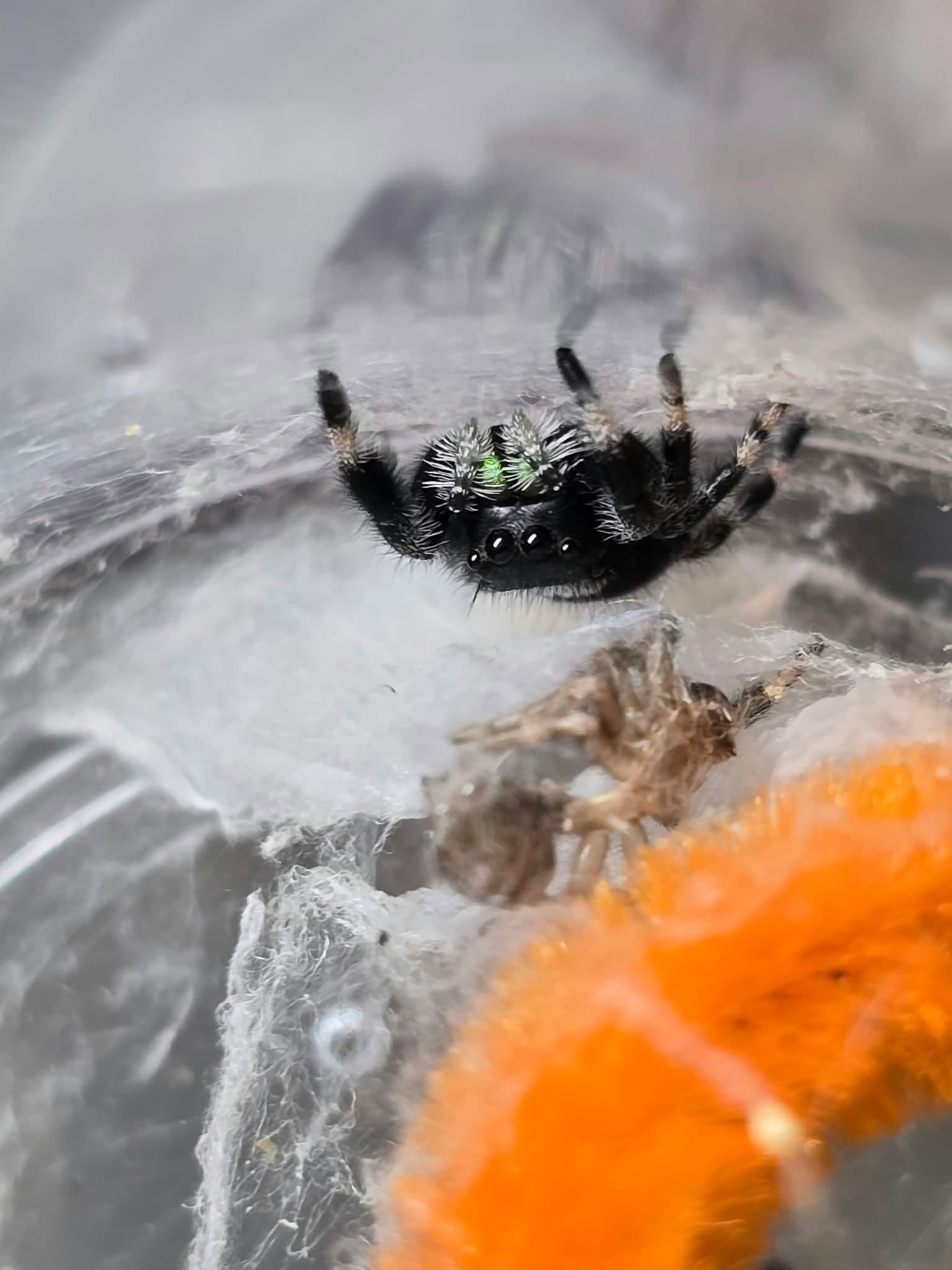
Before a molt, your spider will typically look plump and seal itself inside its hammock — leave it alone during this time. Don’t offer food, and avoid disturbing the enclosure. Right after molting, the spider’s new exoskeleton is soft and fangs haven’t hardened yet, so wait until it’s back to normal (usually a day or two) before offering food again or handling it.
🤝 Handling
Regal jumping spiders tend to be curious and can become comfortable with gentle handling over time. Handle over a table or seated on the floor to prevent injury from falls, keep sessions short, and let the spider “bridge” from hand to hand rather than grabbing it. Avoid handling right before or after a molt.