
Regal Jumping Spider Care Guide
Regal jumping spiders (Phidippus regius) are hardy, low-maintenance, and easy to keep happy once their enclosure is set up right. Here’s what every new keeper needs to know about Regal jumping spider care. Regals are native to Florida. You can learn more about them from the University of Florida’s guide to common Florida spiders.
✅ Regal Jumping Spider Care Starter Checklist
- A small, front- or side-opening enclosure (about 3×3×6″ for juveniles)
- 1–2 inches of coconut fiber or sphagnum moss substrate
- Climbing décor: a branch, cork bark, or artificial plants, plus a hide near the top
- A fine-mist spray bottle
- Appropriately sized feeders, like mini mealworms or flightless fruit flies
- Soft tweezers or tongs for feeding
- Optional: a small thermometer/hygrometer
Want it all in one step? Our Enclosure Kits include a 3×3×6 enclosure, a hide, a shelf, a water/food dish, a misting bottle, and tweezers. You’ll also find more of our favorite gear on our Recommended Products page. Every jumper from Mary’s Jumpers also comes with a mini misting bottle and starter mealworms (when available).
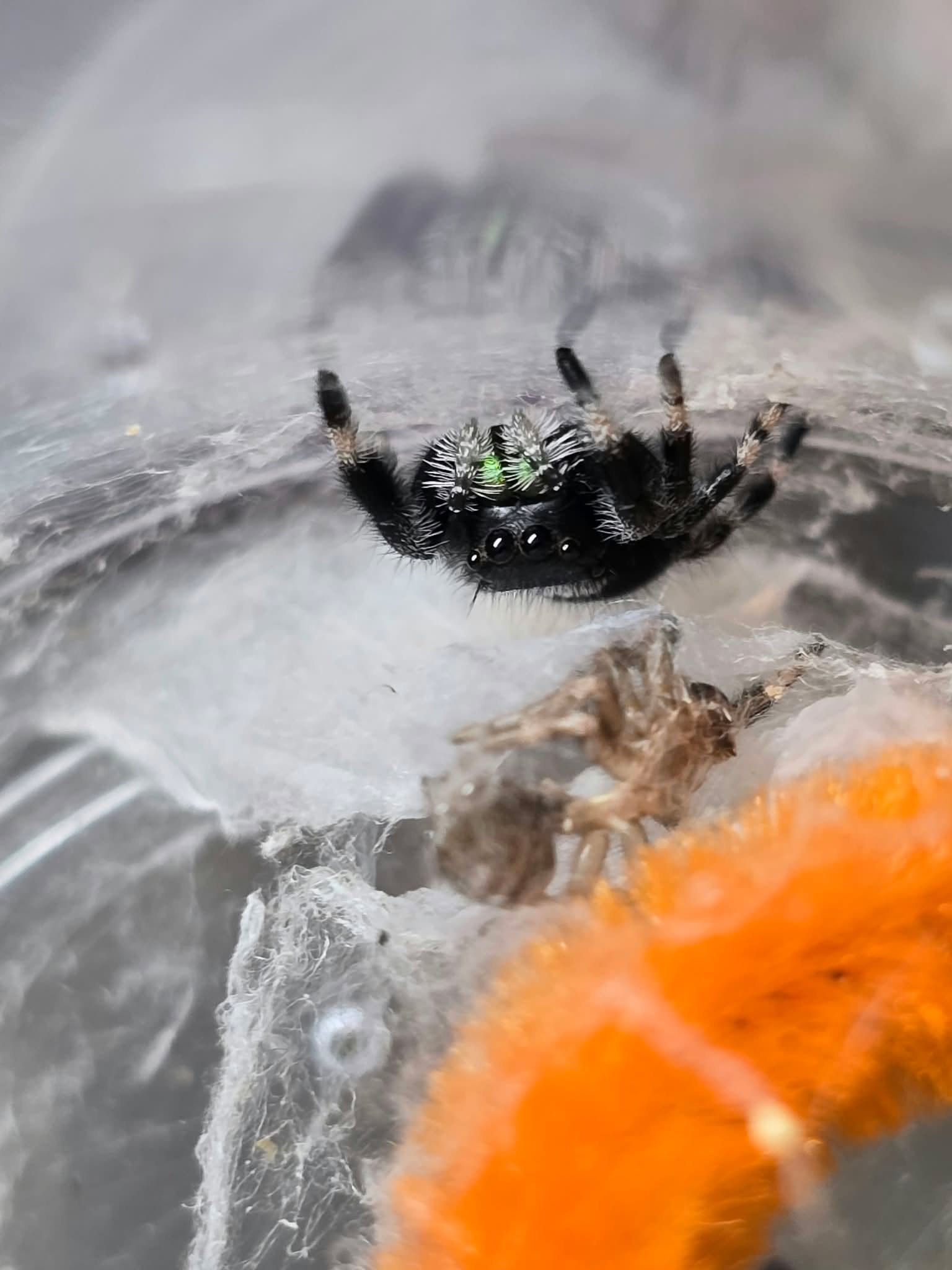
🌡️ Temperature & Humidity
Aim for a daytime temperature of 75–85°F, dropping slightly at night. Humidity should sit somewhere in the 50–70% range — a bit higher during molting. Most Florida homes stay naturally within this range, so a heat mat or humidifier usually isn’t necessary indoors. A small thermometer/hygrometer combo is an inexpensive way to keep an eye on both.
🦗 Feeding
Young spiders eat daily or every other day; as they mature, 2–3 feedings a week is typical. Keep prey smaller than the spider’s abdomen — mini mealworms, flightless fruit flies, and small crickets all work well, sizing up as your spider grows.
Watch the spider’s abdomen size as a guide: a shrunken abdomen means it’s hungry, a very plump one means it’s had enough (or is getting ready to molt). Never feed a spider that’s sealed itself into its hammock — that’s a sign a molt is coming.
💧 Water & Misting
Mist the sides of the enclosure lightly every 1–2 days rather than spraying the spider directly — Regal Jumping spiders drink water droplets off the walls and substrate. A small water dish can help too, though many keepers rely on misting alone. Increase misting frequency slightly in the days leading up to a molt.
🔄 Molting
Before a molt, your spider will typically look plump and seal itself inside its hammock — leave it alone during this time. Don’t offer food, and avoid disturbing the enclosure. Right after molting, the spider’s new exoskeleton is soft and fangs haven’t hardened yet, so wait until it’s back to normal (usually a day or two) before offering food again or handling it.
📏 Instars & Growth Chart: What i3, i5, and i6 Mean
An instar is the stage between two molts, and it’s how breeders describe a jumping spider’s age. The “i” stands for instar, so an i3 jumping spider is in its third stage and an i6 is in its sixth. Every molt moves a spider up one instar, and each one brings a noticeable jump in size.
Here’s a regal jumping spider growth chart showing roughly what to expect. Sizes are body length, not counting the legs, and every spider grows at its own pace depending on temperature and how much it eats.
Young spiders molt every few weeks; as they get bigger the gap between molts stretches to a month or more. By i5–i6 a jumper is hardy and big enough to enjoy watching, which is why it’s a popular age to bring one home. See who’s ready now in Meet the Clutch.
🤝 Handling
Regal jumping spiders tend to be curious and can become comfortable with gentle handling over time. Handle over a table or seated on the floor to prevent injury from falls, keep sessions short, and let the spider “bridge” from hand to hand rather than grabbing it. Avoid handling right before or after a molt.
❓ Common Questions
Are regal jumping spiders dangerous?
No. Regal jumping spiders are not considered dangerous to people. They’re shy and rarely bite, and a bite from a calm, gently handled spider is very uncommon. Most keepers never experience one.
How big do regal jumping spiders get?
They’re one of the largest jumping spiders in North America. Adult females can reach close to an inch in body length, while males usually stay a bit smaller and slimmer.
How long do they live?
Males typically live around a year, while females often live 1.5–2 years with good care.
Are regal jumping spiders good for beginners?
Yes! Regal jumping spider care is simple, and they’re one of the most popular beginner spiders because they’re hardy, curious, and don’t need special heating in most homes. Many keepers find them surprisingly interactive, since they’ll turn to watch you and follow your movements. Have more questions? Check out our FAQ.